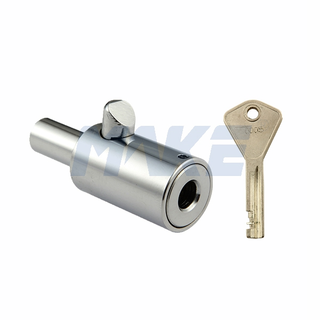
lock barrel
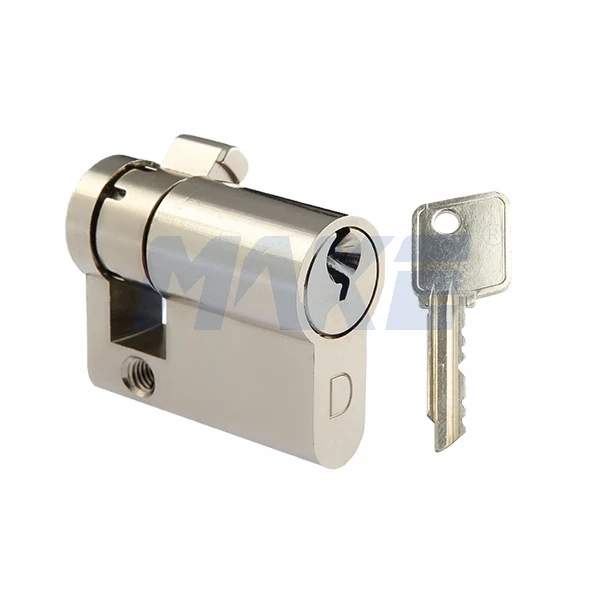
In the world of security and access control, few components are as fundamental as the lock barrel, also known as the lock cylinder. Though small in size, this essential mechanism plays a pivotal role in safeguarding homes, vehicles, and commercial properties. Acting as the “heart” of a locking system, the lock barrel determines whether a door, cabinet, or device remains securely locked or easily accessible with the correct key.
From the front door of a home to a vending machine or a high-security safe, lock barrels are integral to nearly every type of mechanical locking device. Understanding how they function, what types exist, and their unique benefits provides valuable insight into how modern security mechanisms operate.
A lock barrel is the inner component of a lock that houses the tumblers, pins, wafers, or discs responsible for recognizing the correct key. Typically cylindrical or tubular in shape, this part of the lock determines whether the locking mechanism can rotate and disengage the bolt.
When a correctly cut key is inserted into the lock barrel, its unique pattern aligns the internal pins or wafers at the proper height, allowing the barrel to rotate freely. Once this rotation occurs, the mechanical linkage inside the lock retracts or extends the bolt, effectively locking or unlocking the device.
Because of this role, the lock barrel serves as the central interface between the key and the mechanical parts of the lock body. It is precisely engineered to provide reliability, resistance to tampering, and smooth operation throughout years of use.
Lock barrels are found in countless devices — from household door locks and padlocks to automotive locks, filing cabinets, bike locks, and vending machines. Their design and complexity vary according to the level of security required for a given application.
The lock barrel’s distinctive cylindrical or tubular shape is not only practical but also enhances security. This design allows the locking mechanism to be compact, robust, and adaptable to various installations. The cylindrical profile helps minimize the risk of physical attacks, such as drilling or picking, by reducing access points for manipulation tools.
Lock barrels are widely known for their high resistance to picking and tampering. The internal configuration of pins, wafers, or discs within the barrel must align precisely to allow rotation. Without the correct key pattern, the mechanism remains locked, offering an additional layer of protection against unauthorized access.
Another key feature of lock barrels is their versatility. They can be used in a broad range of locking systems — from residential door locks and office cabinets to gaming machines and industrial enclosures. Depending on the type of barrel used, these mechanisms can provide basic protection or meet stringent security standards.
Unlike some integrated locking systems, lock barrels can often be replaced independently of the rest of the hardware. This means that when a key is lost, stolen, or compromised, users can simply change the cylinder instead of replacing the entire lockset. This modularity makes lock barrels both cost-effective and user-friendly.
Over the years, various lock barrel designs have been developed to meet different security requirements and mechanical configurations. The main types include:
The pin tumbler cylinder is the most common type of lock barrel, used extensively in residential door locks, padlocks, and safes. Inside the cylinder are a series of spring-loaded pins divided into upper and lower sections. When the correct key is inserted, it lifts the pins to align along a shear line, allowing the cylinder to rotate and operate the locking bolt.
This design, originally patented by Linus Yale Jr. in the 19th century, remains the foundation of most modern key-operated locks due to its balance of simplicity, durability, and reliability.
Wafer lock cylinders function similarly to pin tumbler locks but use flat, spring-loaded wafers instead of round pins. They are commonly used in automotive locks, filing cabinets, and low-security applications. Although they offer moderate protection, wafer locks are typically easier to pick or decode than high-end pin or disc-based systems, making them suitable for non-critical uses.
Tubular lock barrels, also called radial pin locks, feature pins arranged in a circular pattern around the keyway. This configuration is often used in vending machines, bicycle locks, and coin-operated devices, where compact size and high resistance to manipulation are essential. The circular key required for tubular locks provides multiple contact points, enhancing security and reducing the likelihood of unauthorized duplication.
In disc detainer locks, the mechanism relies on a series of rotating discs rather than spring-loaded pins or wafers. The key rotates each disc to a precise position, aligning internal slots that allow the locking bar to move. This design is popular in high-security padlocks, industrial enclosures, and motorcycle locks because of its exceptional resistance to picking, drilling, and environmental wear.
Lock barrels offer numerous benefits that make them a preferred choice in both consumer and industrial locking systems.
One of the most important advantages of cylinder locks is their replaceable core. Unlike mortise or rim locks, where the entire mechanism may need replacement if compromised, a lock barrel can be swapped out quickly and easily. This modularity means users can rekey or upgrade their security without major structural changes.
In most cases, it’s as simple as loosening a retaining screw, sliding out the old cylinder, and installing a new one.
Lock barrels are available in multiple sizes and configurations that can fit a wide range of locksets from different manufacturers. Moreover, they can be keyed alike, master keyed, or keyed differently according to user needs:
Keyed alike systems allow one key to open multiple locks, simplifying management for households or small businesses.
Master key systems offer hierarchical access, enabling multiple users to have different access privileges under one overarching master key.
This flexibility makes lock barrels especially useful in commercial, educational, and institutional settings where controlled access is critical.
Modern lock barrels can incorporate additional anti-tampering features such as hardened steel inserts, anti-drill plates, and complex keyways. High-end models may also include restricted key profiles, ensuring keys can only be duplicated by authorized locksmiths or the original manufacturer. These measures significantly enhance protection against both mechanical and unauthorized key-based attacks.
Constructed from robust materials like brass, stainless steel, or hardened alloys, quality lock barrels are built for longevity. They are engineered to withstand repeated key insertions, temperature fluctuations, moisture, and physical wear. Regular lubrication and maintenance can keep a lock barrel functioning smoothly for decades.
Lock barrels are essential in various sectors due to their adaptability and reliability:
Residential Security: Used in main entrance doors, gates, and garages for everyday protection.
Commercial Buildings: Common in offices, storage rooms, and access-controlled areas where multiple locks must be managed efficiently.
Automotive Industry: Wafer and tubular locks secure car doors, ignitions, and fuel caps.
Vending and Gaming Machines: Tubular or disc detainer barrels protect cash boxes and internal components.
Industrial Equipment: Used in enclosures, cabinets, and machinery where tamper resistance is critical.
From low-security environments to mission-critical installations, lock barrels provide tailored protection suitable for every need.
The lock barrel remains one of the most important innovations in mechanical security, combining centuries of engineering refinement with modern precision. As the core of most lock mechanisms, it determines who gains access and who does not — a responsibility that requires both mechanical excellence and reliability.
Its cylindrical design, interchangeable functionality, and versatility across applications have made it indispensable in homes, vehicles, businesses, and public infrastructure worldwide. Whether it’s the reliable pin tumbler on a front door or the robust disc detainer in a security padlock, the lock barrel stands as a quiet guardian of safety and privacy in everyday life.
As technology evolves and integrates digital access systems with traditional mechanics, the humble lock barrel continues to adapt — proving that even in an increasingly electronic world, the foundation of physical security still rests on a solid cylinder of precision engineering.