
What Are Commercial Door Locks? Grades, Designs, and Use Cases Explained
Security is a fundamental concern for any commercial property. From office buildings and retail stores to warehouses, hospitals, and industrial facilities, controlling access to doors is essential for protecting people, assets, and sensitive information. At the heart of this protection system are commercial door locks—specialized locking solutions designed to withstand heavy use, provide enhanced security, and support access control for multiple users.
Unlike residential locks, which are typically designed for light daily use by a small number of people, commercial door locks must endure constant operation, stricter safety regulations, and higher security demands. Choosing the right commercial lock is not just about locking a door—it is about balancing durability, compliance, convenience, and long-term reliability.
This article provides an in-depth overview of what commercial door locks are, how they are graded, the most common types used in commercial environments, and how to select the right lock for different applications.
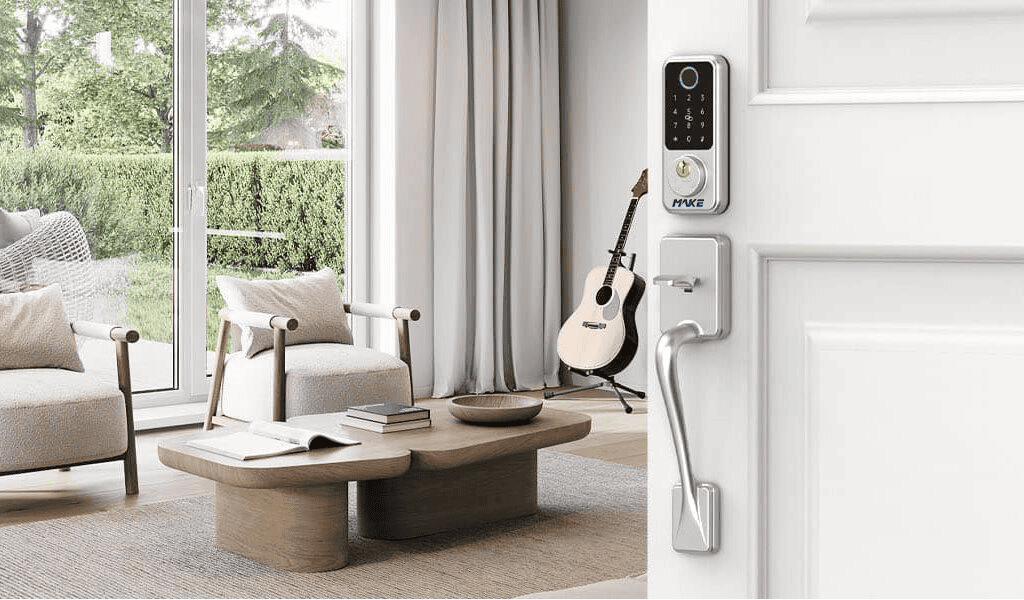
Commercial door locks are mechanical or electronic locking devices specifically rated for use in commercial environments. These locks are designed for installation in offices, retail spaces, educational institutions, healthcare facilities, factories, hotels, and other commercial properties.
What sets commercial door locks apart is their ability to handle:
High-frequency daily use
Multiple users accessing the same door
Stricter building and fire safety codes
Greater resistance to forced entry and wear
Commercial locks are typically installed on doors that experience continuous traffic throughout the day, sometimes involving dozens or even hundreds of users. As a result, they are built with stronger internal components, heavier materials, and standardized designs that support easy maintenance and compatibility with access control systems.
At first glance, commercial and residential locks may look similar, but their internal construction and performance standards are very different.
Commercial locks are engineered with reinforced components to withstand repeated use without loosening, jamming, or failing. Residential locks, by contrast, are intended for lighter use and may wear out quickly under commercial conditions.
Commercial properties often face higher security risks, including theft, unauthorized access, and vandalism. Commercial locks are tested to resist forced entry, picking, and drilling more effectively than standard residential locks.
Many commercial door locks must meet specific requirements related to fire safety, accessibility, and building codes. These standards are rarely required for residential locks.
Commercial locks often support multiple access methods, such as master key systems or electronic credentials, allowing businesses to manage access efficiently without constantly rekeying doors.
Commercial door locks are classified into grades based on strength, durability, and performance. These grades are defined by industry standards and help buyers choose the appropriate lock for specific applications.
Grade 1 locks represent the highest level of security and endurance available for commercial use. These locks are manufactured using heavy-duty materials such as stainless steel and are rigorously tested for strength, impact resistance, and longevity.
Key characteristics of Grade 1 locks include:
- Exceptional resistance to forced entry
- High cycle life for frequent use
- Fire-rated options available
- Professional-grade finishes such as satin chrome or satin nickel
Grade 1 locks are commonly used in high-security and high-traffic environments, including:
- Banks and financial institutions
- Museums and government buildings
- Retail storefronts
- Storage rooms with valuable inventory
These locks are ideal for doors where security cannot be compromised.
Grade 2 locks offer a strong balance between security, durability, and cost. While slightly less robust than Grade 1 locks, they are still well-suited for most commercial applications.
Features of Grade 2 locks include:
Strong materials and construction
Higher resistance than Grade 3 locks
Suitable for medium to high traffic areas
Grade 2 locks are commonly installed in:
Office building entrances
Commercial lobbies
Educational facilities
Multi-tenant buildings
For many businesses, Grade 2 locks provide sufficient protection without the higher cost associated with Grade 1 hardware.
Grade 3 locks are the lowest commercial grade, offering basic security and durability. These locks are made with lighter materials and are easier to breach compared to higher-grade options.
Common characteristics include:
- Lower resistance to forced entry
- Suitable for low-traffic areas
- More affordable than Grade 1 and Grade 2 locks
Grade 3 locks are typically used on:
- Interior office doors
- Utility rooms
- Low-risk commercial areas
- Residential-style commercial buildings
While not suitable for exterior doors or sensitive areas, Grade 3 locks can still play a useful role in controlled environments.
Selecting the right commercial door lock depends on door type, security needs, traffic level, and access requirements. Below are the most common types of commercial door locks used today.
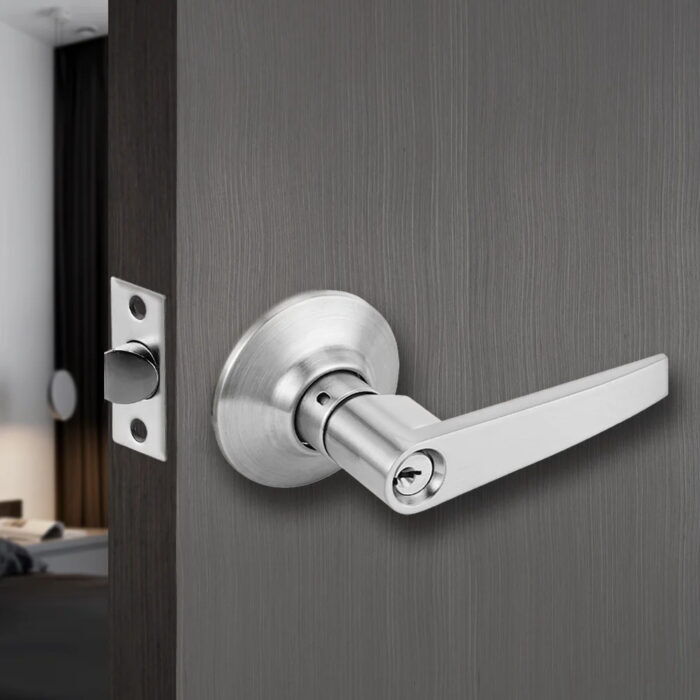
Cylindrical lever locks are one of the most widely used locking solutions in commercial settings. Their popularity comes from their simplicity, accessibility, and ease of installation.
Key Features
Lever-style handle for easy operation
Compatible with accessibility standards
Moderate security level
Simple maintenance and replacement
The lever handle design makes these locks particularly user-friendly, allowing doors to be opened even when hands are full. This makes them ideal for high-traffic areas such as hallways, break rooms, and storage areas.
Common Applications
Interior commercial doors
Office corridors
Supply rooms
Employee-only access doors
While cylindrical lever locks do not offer the highest level of security, they are a practical and cost-effective choice for many commercial applications.
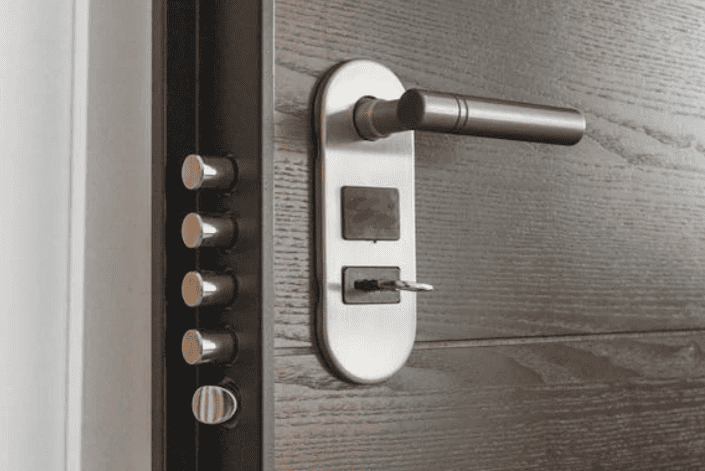
Mortise locks are known for their strength, reliability, and long service life. Unlike cylindrical locks, mortise locks are installed within a pocket cut into the door, known as a mortise.
Key Features
Robust internal construction
Higher resistance to tampering
Smooth and consistent operation
Long lifespan
Because of their complex design, mortise locks typically require professional installation. However, the added effort is often justified by their superior performance and durability.
Common Applications
Exterior commercial doors
Main building entrances
Historic or architectural buildings
High-traffic commercial facilities
Mortise locks are often chosen for doors that must withstand both physical force and environmental exposure.
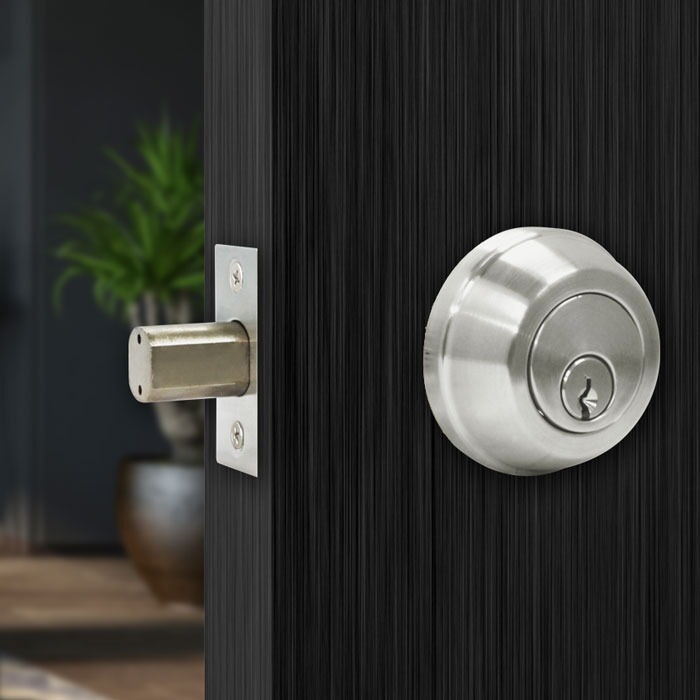
Deadbolts provide one of the most effective forms of mechanical security for commercial doors. Unlike latch-based locks, deadbolts extend a solid metal bolt into the door frame, making forced entry significantly more difficult.
Types of Deadbolts
Single-cylinder deadbolts: Keyed on the exterior and operated by a thumb turn on the interior
Double-cylinder deadbolts: Require a key on both sides for added security
Deadbolts operate without spring mechanisms, reducing the risk of lock manipulation.
Common Applications
Doors leading to restricted areas
Back entrances and service doors
Storage rooms and secure offices
Deadbolts are often used alongside other lock types to provide layered security.
Electronic door locks represent a modern approach to commercial security, combining convenience with advanced access control capabilities.
Key Features
Keypad, card, or biometric access
No physical keys required
Easy access management
Audit trails for monitoring entry
Electronic locks reduce the risks associated with lost or stolen keys and allow businesses to quickly update access permissions.
Common Applications
Offices with restricted access
Hotels and hospitality facilities
Healthcare and laboratory environments
Data centers and secure rooms
Many electronic locks can be integrated with broader security systems, offering centralized control and real-time monitoring.
Selecting the right commercial door lock is a crucial decision for any business, as it directly impacts security, accessibility, and long-term durability. While cost is often a factor, it should never be the sole consideration. Instead, several key aspects must guide your choice to ensure the lock meets the specific needs of your facility.
Security Requirements: Different areas of a building require varying levels of protection. Exterior entrances, storage rooms, or sensitive offices may need high-security Grade 1 or Grade 2 locks, while interior doors with lower risk can use Grade 3 locks or standard lever locks. Assessing potential threats and determining which areas demand maximum protection is essential.
Door Material and Location: The type of door—wood, metal, or glass—and its placement play a significant role in lock selection. Certain locks, like mortise locks, are better suited for heavy-duty doors, whereas cylindrical lever locks are ideal for standard interior doors.
Traffic Volume: High-traffic areas need locks that can withstand frequent use without wearing down. Consider locks tested for hundreds of thousands of cycles to ensure longevity.
Compliance and Maintenance: Ensure the lock meets local building codes and accessibility standards. Additionally, choose locks that are easy to maintain or upgrade as your security needs evolve.
By carefully evaluating these factors, businesses can select a commercial door lock that balances security, functionality, and durability.
Commercial door locks are just one part of a comprehensive security strategy. When combined with surveillance systems, alarms, and access management policies, they form a strong first line of defense against unauthorized entry.
Modern businesses increasingly rely on smart locking solutions that offer flexibility, accountability, and scalability. As security threats evolve, so too must the locking systems that protect commercial spaces.
Commercial door locks play a critical role in safeguarding businesses, employees, and assets. From understanding lock grades to choosing between mechanical and electronic options, selecting the right lock requires careful evaluation of security needs, usage patterns, and regulatory requirements.
Whether securing a high-traffic office building or a sensitive industrial facility, investing in the right commercial door lock ensures durability, reliability, and peace of mind. As technology continues to advance, commercial locking systems will remain an essential component of modern building security.


_80x80.jpg "What Are the Advantages of Triangle Locks?")


