ATM Lock Buying Guide: Upgrade Your Security
ATMs provide convenient self-service banking functions, including cash deposits and withdrawals. However, because these machines store substantial amounts of cash, they are attractive targets for criminals.
If an ATM lock does not provide sufficient security, it can trigger a chain reaction of problems, much like falling dominoes. These include financial losses caused by forced entry, increased maintenance costs due to lock damage, and operational disruptions that affect the normal functioning of ATM equipment.
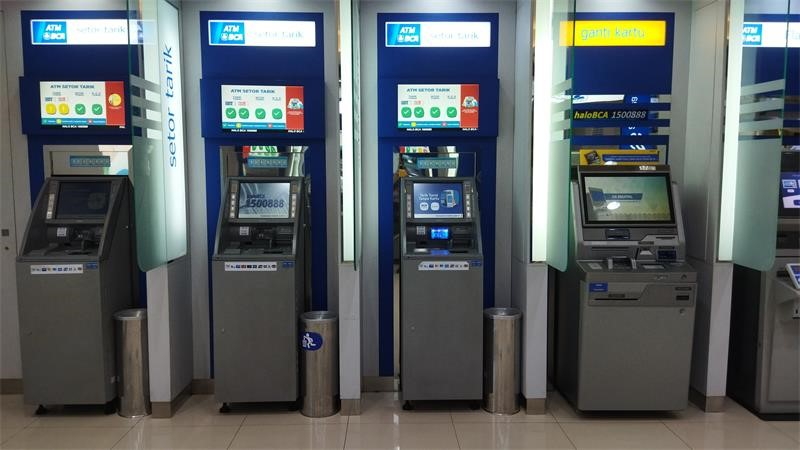
How can these risks be addressed at their source? Let's take a closer look at how Company A tackled these challenges with MAKE.
Company A is a provider of banking automation equipment and technology solutions. Its independently developed brand has become one of the leading brands in Country M, making the company an important player in the local financial equipment manufacturing and services industry.
Company A offers advanced banking automation solutions, including ATMs, cash deposit machines (CDMs), teller machines, and self-service terminal systems. Its products and services are primarily supplied to major banks, financial institutions, government projects, and businesses involved in automated infrastructure.
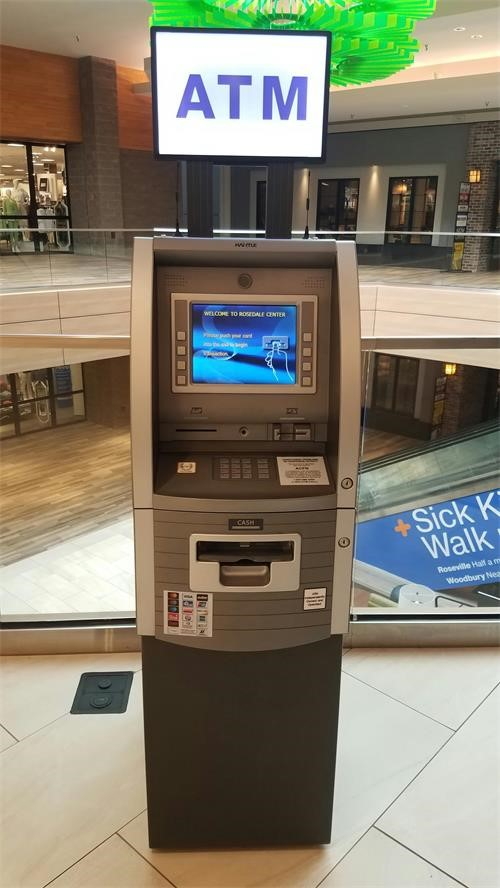
Following a "Global Technology + Local Manufacturing" strategy, Company A is committed to improving the security and convenience of self-service banking through technological innovation and localized manufacturing.
As ATM deployment scenarios become increasingly diverse and complex, particularly in remote or unattended locations, the security requirements for locking systems have become more demanding.
During the use of its original locks, Company A received frequent customer complaints about several recurring problems:
01. Vulnerability to Picking
The original lock cylinder featured a relatively simple internal structure, making it vulnerable to picking and other unauthorized opening techniques.
02. Risk of Unauthorized Key Duplication
The keys could be easily copied, creating potential security vulnerabilities and increasing the risk of unauthorized access to ATM compartments.
03. Insufficient Key Combinations
The limited number of available key combinations made it difficult to implement differentiated access management across large-scale ATM deployments.
04. Corrosion and Mechanical Wear
After prolonged use, the locks were prone to rust and corrosion. This caused moving mechanical components to become less responsive or even jam, resulting in higher maintenance costs and potential equipment downtime.
Company A therefore needed a more secure mechanical locking solution to replace its existing locks. The new solution had to effectively address these issues, strengthen the brand's security image, and build greater market confidence in its products.
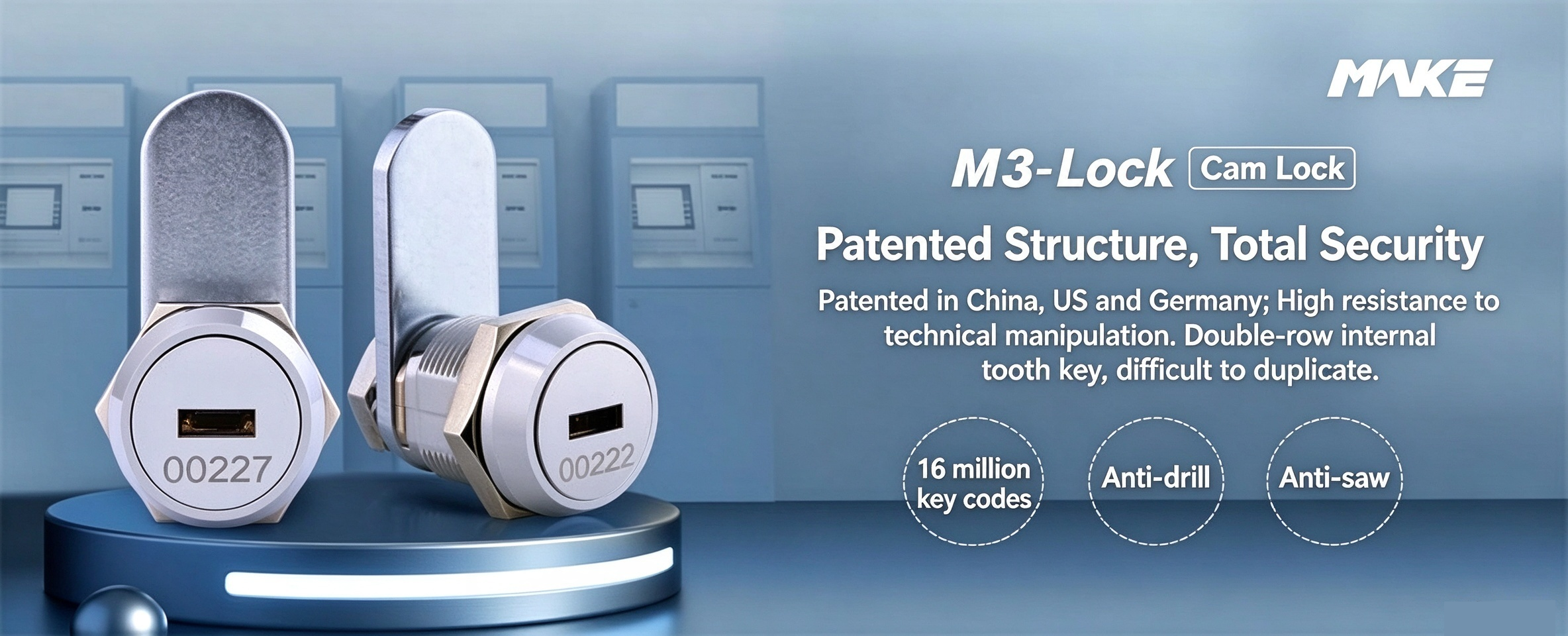
Based on Company A's requirements, we recommended the M3 mechanical lock, certified to Grade C by China's Ministry of Public Security.
The M3 combines an advanced lock cylinder structure, enhanced resistance to physical attacks, high-security key technology, extensive key combinations, and durable materials to provide comprehensive protection for ATM equipment.
MAKE independently developed a simplified disc-in-disc wafer key system featuring an innovative "wafer-within-a-wafer" design. This structure adds complexity to the lock cylinder's internal mechanism, making unauthorized manipulation more difficult and significantly enhancing cylinder security.
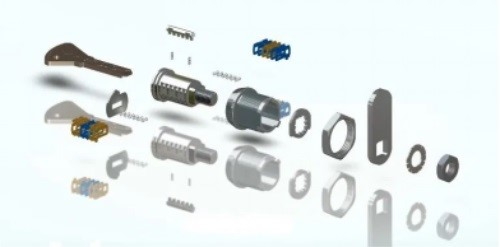
The M3 provides up to 30 minutes of resistance against picking and drilling attacks, helping prevent unauthorized access through common technical opening methods.
Its enhanced physical security makes it considerably more difficult for criminals to compromise the locking mechanism using tools or drilling equipment.
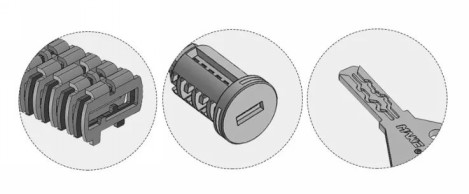
The M3 features double-row internal-cut keys designed to work with its sophisticated lock cylinder structure. This combination increases the complexity of key engagement and makes unauthorized unlocking more difficult.
The keys feature precisely milled cutting profiles manufactured through demanding production processes. Their high manufacturing precision and specialized key geometry help reduce the risk of unauthorized key duplication and improve overall access security.
The M3 supports master key system configurations, making it easier to manage multiple ATM units through a unified access management structure.
It offers more than 16 million possible key combinations, together with customized key coding services. This allows financial institutions to establish different access control levels according to the security requirements of individual branches, locations, and equipment groups.
Such flexibility is particularly valuable for banks and financial equipment operators managing large ATM networks across multiple geographical areas.
The M3 is engineered for long-term reliability, with different materials selected according to the functional requirements of individual components.
- Lock body: Made of zinc alloy to provide structural strength and durability.
- Moving components: Critical moving parts, including wafers and keys, are made of brass to ensure reliable mechanical operation and resistance to wear.
In addition, the M3 features a bright chrome or bright nickel surface finish, providing an attractive appearance while improving corrosion resistance.
With an IP65 protection rating, the lock offers protection against dust ingress and water jets, making it suitable for demanding operating environments.
Its durable construction helps prevent common lock failures caused by breakage, corrosion, and rust. This reduces the frequency of on-site repairs and replacements, minimizes equipment downtime, and lowers long-term maintenance expenses.
Overall, the M3's multi-layered security design and durable construction help maintain stable locking performance and support the continuous operation of ATM equipment.
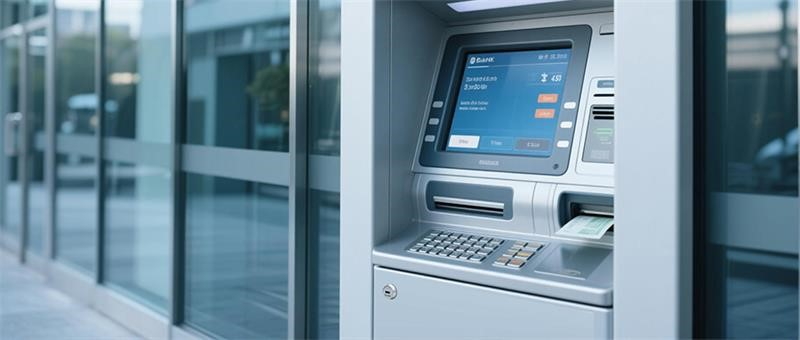
According to Company A's project manager:
"The MAKE M3 high-security cam lock provides a solid security barrier for our ATMs. Its quality is reliable, maintenance is convenient, and the after-sales service team responds promptly."
Following the implementation of the M3, Company A significantly reduced the incidence of on-site ATM security incidents, particularly those involving forced entry and unauthorized key duplication.
The improved locking solution also delivered several operational benefits:
- Lower maintenance and operating costs: Reduced the need for maintenance personnel and spare parts by minimizing lock-related failures and security incidents.
- Shorter maintenance and replacement cycles: Improved lock durability reduced the frequency of repairs and replacements.
- Less equipment downtime: More reliable mechanical performance helped maintain normal ATM operations and service availability.
- Higher engineering efficiency: With fewer lock-related problems to address, engineers could devote more time to identifying and resolving other critical equipment risks.
- Improved project delivery efficiency: More stable equipment performance and reduced maintenance requirements helped streamline project implementation and delivery.
Choosing a high-security lock is an essential step in protecting ATM equipment against potential security threats.
MAKE provides integrated locking solutions for financial self-service terminals, helping customers reduce operating costs, improve operational efficiency, enhance the end-user experience, and establish a stronger security barrier for their equipment.
We look forward to working with you to advance security and innovation across the financial terminal industry.