High-Security Zinc Alloy RFID Locks for Hotels, Offices, and Smart Access Control Systems
Home News Industry News High-Security Zinc Alloy RFID Locks for Hotels, Offices, and Smart Access Control Systems
Jun 22, 2026 / Industry News / 31 views
Radio Frequency Identification (RFID) locking systems have become a cornerstone of modern access control across commercial, industrial, and residential environments. By using wireless radio waves to authenticate authorized users, RFID locks eliminate the need for traditional mechanical keys, significantly improving convenience, security, and operational efficiency.
These systems are widely deployed in office buildings, hotels, gyms, schools, hospitals, gated communities, storage facilities, and parcel lockers. With a simple tap of a card, key fob, wristband, or mobile credential, users can gain instant access to secured areas without physical contact or manual key handling.
Among the many material and design innovations in this sector, the zinc alloy RFID lock has emerged as a preferred solution. Combining robust structural integrity with advanced electronic access technology, zinc alloy RFID locks are increasingly seen as a standard for high-performance smart security hardware.

A zinc alloy RFID lock is an electronic locking device that integrates RFID-based authentication with a durable zinc alloy housing. It is designed to provide keyless access control through encrypted radio communication between the lock reader and an authorized credential such as a card or tag.
Unlike traditional mechanical locks, this system does not rely on physical keys or complex wiring infrastructures. Instead, it uses embedded electronic components and RFID modules to verify identity and trigger the locking mechanism.
The zinc alloy structure plays a critical role in ensuring the durability and reliability of the device. It protects internal electronic components from external impact, corrosion, and environmental stress, making it suitable for both indoor and semi-outdoor applications.
These locks are widely used in:
The combination of secure authentication and strong physical construction makes zinc alloy RFID locks a practical solution for modern access control requirements.
The selection of zinc alloy as the primary material for RFID locks is not accidental. It is based on a balance of mechanical strength, aesthetic flexibility, and manufacturing efficiency.
Zinc alloy is significantly denser and heavier than aluminum or plastic materials commonly used in low-cost locking systems. This density provides enhanced resistance against physical force, tampering, and impact damage.
For access control systems, structural strength is essential because the lock body must withstand frequent daily use while maintaining consistent performance over long periods.
Zinc alloy is highly suitable for die-casting processes, allowing manufacturers to create detailed, modern, and ergonomic designs. This enables the production of sleek lock bodies with smooth edges and refined finishes, which are especially important for commercial and hospitality environments.
The material also supports various surface treatments such as:
These finishing options enhance visual appeal while improving durability.
When properly treated and plated, zinc alloy exhibits strong resistance to corrosion, humidity, and daily wear. This makes it suitable for environments where temperature changes and moisture exposure are common, such as bathrooms, gyms, and coastal buildings.
Zinc alloy is highly compatible with high-pressure die casting, enabling efficient large-scale manufacturing. This reduces production costs while maintaining consistent quality, making it an ideal material for OEM and ODM smart lock production.
Modern zinc alloy RFID locks integrate multiple smart features designed to enhance usability, security, and system management. Below are the key functional highlights commonly found in advanced models.
The core functionality of these locks is RFID-based access control. Users simply present a programmed card, fob, or wristband near the reader to unlock the door.
This contactless system improves:
The use of an all-metal zinc alloy housing gives the lock a premium and professional appearance. It also enhances structural integrity and ensures better protection for internal electronic components.
Advanced RFID lock systems support hierarchical user control structures, typically including:
This allows facility managers to assign different access permissions depending on user roles, improving security management in multi-user environments.
One of the most practical features in modern RFID locks is the ability to switch between public and private modes.
Private Mode: Access is restricted to specific authorized users.
Public Mode: The lock can be used in shared environments such as gym lockers or coworking spaces where temporary access is needed.
This flexibility makes the system suitable for a wide range of applications.
Despite being electronic, most zinc alloy RFID locks include a mechanical override or master key system. This ensures emergency access in situations such as:
This hybrid safety design enhances reliability and operational confidence.
Many zinc alloy RFID locks are designed with IP65 protection, meaning they are resistant to dust ingress and low-pressure water jets. This level of protection ensures stable operation in semi-outdoor or humid environments.
Typical benefits include:
To prevent unexpected lockouts, RFID locks are often equipped with low battery alerts. These warnings can be delivered through:
This feature ensures timely battery replacement and uninterrupted operation.
In response to increasing hygiene concerns, some models offer anti-microbial surface treatment. This coating helps reduce bacterial growth, including common strains such as E. coli and Staphylococcus aureus, achieving up to 97% inhibition efficiency.
This feature is particularly valuable in healthcare facilities, gyms, and shared public environments.
Zinc alloy RFID locks are designed to fit a wide range of installation scenarios. They can be installed on:
With compatibility for door thicknesses ranging from 0.6 mm to 20 mm, these locks offer strong adaptability across different architectural requirements.
The versatility of zinc alloy RFID locks has contributed to their rapid adoption across various sectors.
Hotels and resorts are among the largest users of RFID locking systems. They provide:
Modern offices use RFID locks for:
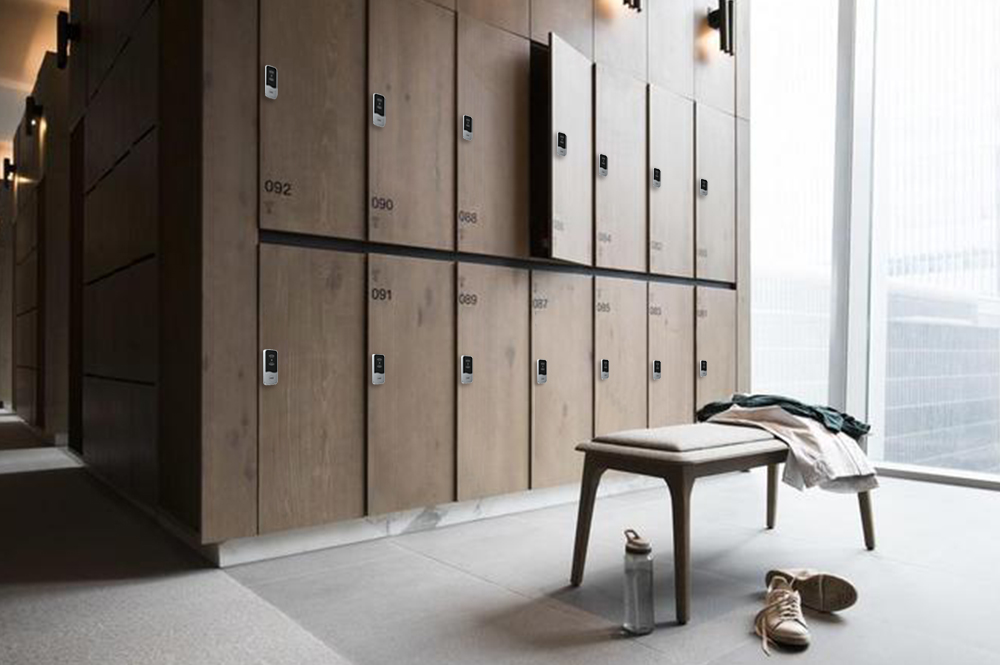
Gyms and spas benefit from RFID lockers due to:
In apartments and gated communities, RFID locks provide:
Schools and universities use RFID systems for:
RFID locks are also widely used in:
The growing popularity of zinc alloy RFID locks is driven by a combination of functional and operational advantages.
RFID credentials are difficult to duplicate compared to traditional keys, significantly reducing unauthorized access risks.
Users no longer need to carry physical keys, improving daily usability and reducing loss-related issues.
Zinc alloy construction ensures long service life even under frequent usage conditions.
With fewer mechanical components, RFID locks require minimal maintenance compared to traditional lock systems.
RFID access control systems can be easily expanded to accommodate hundreds or thousands of users without major infrastructure changes.
Zinc alloy RFID locks are designed for relatively simple installation. Most models support retrofit installation on existing doors without major structural modifications.
Integration capabilities include:
Advanced models may also support cloud-based access control, enabling remote management and real-time monitoring.
The global demand for smart access control solutions continues to grow rapidly due to urbanization, smart building development, and increasing security requirements.
Key trends driving the zinc alloy RFID lock market include:
Modern buildings increasingly integrate IoT-based systems, making RFID locks a core component of intelligent infrastructure.
Post-pandemic hygiene awareness has accelerated the adoption of contactless access systems across public and private sectors.
Many RFID locks are evolving to support hybrid authentication methods, including mobile apps, Bluetooth, and cloud platforms.
Manufacturers are increasingly offering customized solutions, including branding, design modification, and system integration services for global clients.
The future of zinc alloy RFID locks is closely tied to advancements in smart security and digital identity management. Emerging technologies such as biometric authentication, AI-driven access analytics, and cloud-based control platforms are expected to further enhance system capabilities.
In addition, material innovation will continue to improve durability, corrosion resistance, and environmental sustainability. Zinc alloy will likely remain a core material due to its balance of cost efficiency, strength, and design adaptability.
As global demand for secure, convenient, and intelligent access systems continues to grow, zinc alloy RFID locks are expected to play an increasingly important role in shaping the next generation of access control solutions.
Zinc alloy RFID locks represent a significant advancement in modern access control technology. By combining durable metal construction with intelligent RFID-based authentication, they provide a secure, efficient, and user-friendly alternative to traditional mechanical locking systems.
Their widespread application across hospitality, residential, commercial, and industrial sectors demonstrates their versatility and reliability. With continuous improvements in design, functionality, and integration capabilities, zinc alloy RFID locks are positioned to remain a key solution in the evolving smart security landscape.