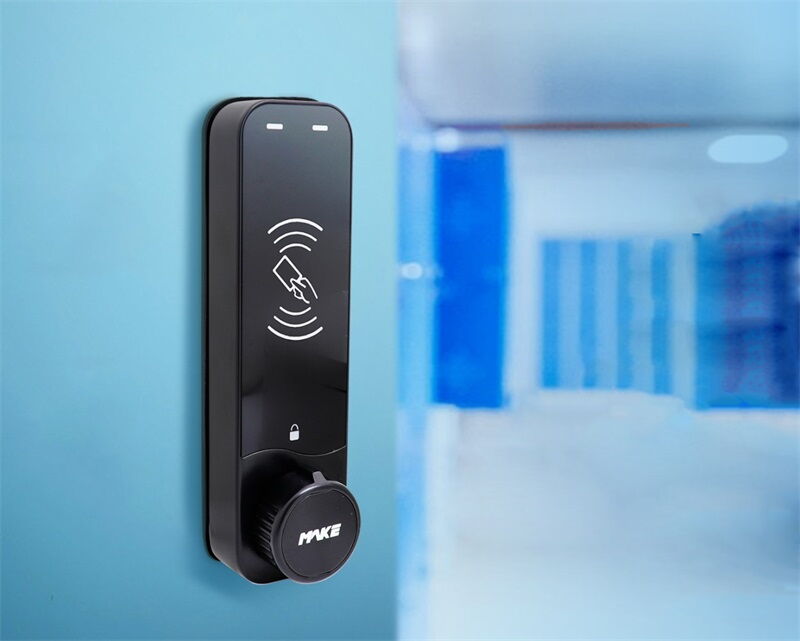
RFID Electronic Locks vs Traditional Locks: Why Smart Access is the Future
Security technology has changed dramatically in recent years. Traditional mechanical locks still serve an important purpose, but modern buildings, businesses, and public facilities increasingly need smarter, faster, and more controllable access systems. Among the most widely adopted solutions is the RFID electronic lock, a technology that combines convenience, security, and efficient access management in one compact system.
RFID electronic locks are now used across hotels, offices, apartments, hospitals, schools, industrial sites, gyms, co-working spaces, and even private homes. Their popularity continues to grow because they eliminate many of the weaknesses of conventional keys while offering features such as quick credential recognition, user authorization management, audit trails, and integration with broader security systems.
This article explores what RFID electronic locks are, how they work, their main components, advantages, applications, types, installation considerations, maintenance needs, and future development trends. By understanding the full value of RFID electronic locks, businesses and property owners can make better decisions when upgrading their security infrastructure.
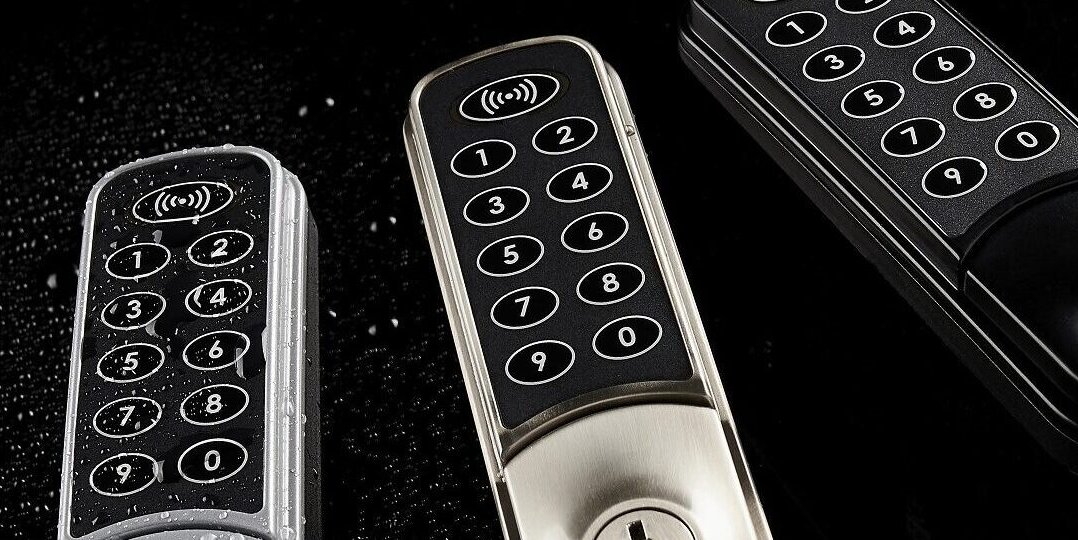
RFID stands for Radio Frequency Identification. It is a wireless, non-contact technology that uses electromagnetic fields to identify and authenticate tags embedded in cards, key fobs, wristbands, or other credentials. In an RFID locking system, the credential acts as the "key," while the electronic lock and reader act as the intelligent access control point.
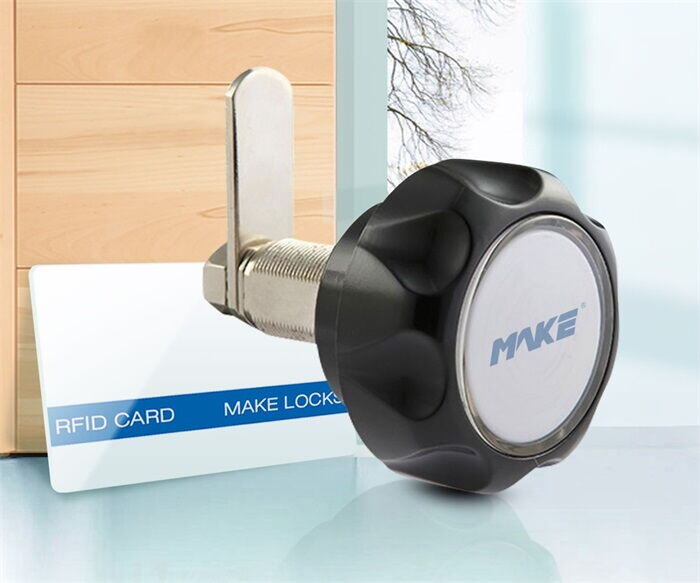
Unlike traditional locks that depend on physical key insertion and mechanical turning, RFID locks operate by reading data stored in a credential when it is brought near the reader. If the system recognizes the credential as valid, it sends a command to disengage the locking mechanism, allowing the door, cabinet, locker, or gate to open. After the access event is complete, the lock typically re-engages automatically.
An RFID lock is therefore more than just a locking device. It is part of a digital access control system that can be programmed, monitored, and updated according to operational needs. This capability makes RFID locks especially valuable in environments where large numbers of users require different levels of access at different times.
RFID locks work through communication between an RFID credential and a reader integrated into or connected to the lock. The credential usually contains a small embedded chip and antenna. When the credential is placed near the reader, the reader emits radio frequency signals that energize the chip and initiate data exchange.
The reader captures the credential's unique identification information and sends it to the lock controller or access management system. The system then checks whether the credential is authorized. If the credential matches stored permissions, the controller activates the electronic mechanism inside the lock, such as a motor, solenoid, or clutch system, to release the latch or bolt.
The process happens in seconds and usually requires only a tap or close-range presentation. Once the user opens and closes the door, the lock returns to its secured state automatically. This quick operation improves user convenience while reducing wear associated with repeated key insertion and turning.
Depending on the system design, RFID locks may function in standalone mode, where authorization data is stored locally in the lock, or in networked mode, where permissions are managed centrally through software. Advanced systems may also record every access event, enabling administrators to review who entered, when they entered, and which credential was used.
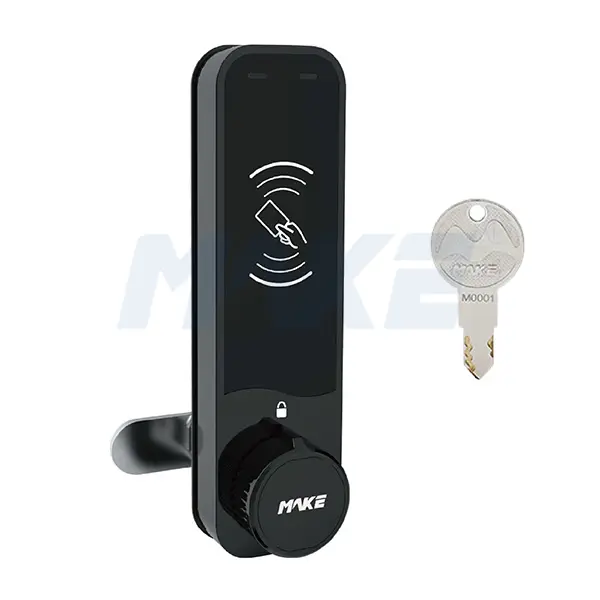
An RFID electronic lock system includes several essential elements that work together to provide secure and reliable access control.
The credential is the item presented by the user to gain access. It may take the form of a card, key fob, wristband, badge, or sticker tag. Each credential contains encoded information that identifies the user or access level. Credentials can be assigned, revoked, or reprogrammed as needed.
The reader is the device that detects and reads the credential. It emits radio waves that communicate with the RFID chip. In some locks, the reader is integrated directly into the lock body or handle. In others, it is mounted externally near the door.
The controller processes the credential data and determines whether access should be granted. In a simple standalone lock, this function may be built into the lock itself. In a larger access control system, the controller may be connected to software and databases for real-time authorization management.
This is the mechanical or electromechanical part that physically secures the door or compartment. Common mechanisms include deadbolts, latches, magnetic locking systems, or motor-driven lock bodies.
RFID locks require power to operate. Many standalone locks use batteries, while wired systems may connect to building power supplies. Battery-powered locks are convenient for retrofits, while wired locks are common in large commercial installations.
In advanced systems, software is used to enroll users, define access permissions, monitor events, generate reports, and integrate the lock with other security infrastructure. This software is particularly useful in hotels, offices, schools, and industrial facilities.
RFID electronic locks are available in many designs to suit different security requirements and installation environments.
These are the most common type and are widely used in hotels, apartments, offices, and public buildings. They control access to interior or exterior doors and may include lever handles, mortise locks, deadbolts, or cylindrical lock formats.
Cabinet locks are designed for drawers, storage compartments, filing cabinets, medical trolleys, retail display cases, and personal lockers. They are often compact and ideal for securing valuables or restricted items in small spaces.
Commonly installed in gyms, spas, schools, staff changing rooms, and recreational facilities, RFID locker locks allow users to access assigned lockers using cards or wristbands. They are popular because they remove the need for keys or combination memorization.
Hotel locks are specially designed for guest room access. They typically support temporary card issuance, check-in and check-out management, audit trail recording, and compatibility with hotel management software systems.
These systems are used for perimeter entry, parking facilities, and controlled-access zones in industrial or commercial sites. They may work alongside turnstiles, boom barriers, or automated gates.
The growing use of RFID electronic locks is driven by a wide range of operational and security benefits.
One of the biggest advantages of RFID locks is ease of use. Users do not need to insert a physical key or remember a complex code. A simple card tap or fob presentation is enough to unlock the door. This makes access faster and more user-friendly, especially in facilities with high traffic.
Traditional keys are difficult to manage once distributed. If a key is lost or copied, security may be compromised, and replacing locks can be expensive. RFID credentials, by contrast, can be deactivated and replaced quickly through the system. Access can also be customized for specific users, times, and locations.
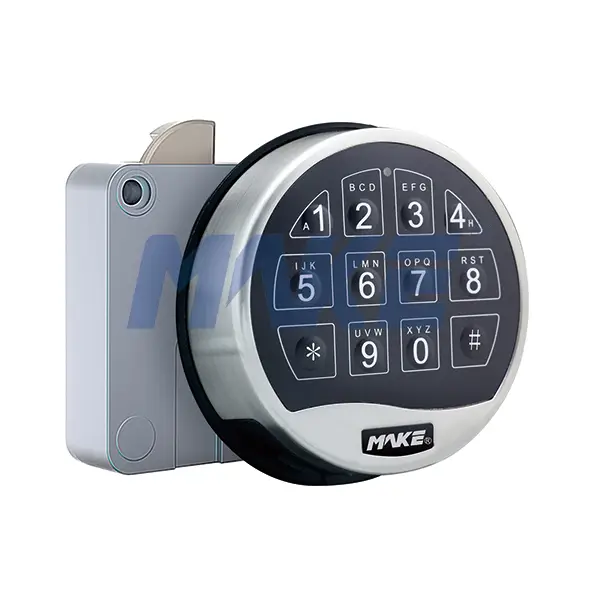
RFID electronic locks provide stronger control over who can enter a space. Some systems use encrypted communication, anti-cloning technology, and multi-level authentication to reduce unauthorized access risks. Audit trail functions also add accountability by recording entry events.
Organizations with many users benefit greatly from the easy issuance and revocation of RFID credentials. Employees, guests, contractors, or residents can receive access rights tailored to their needs. When a user no longer requires access, permissions can be removed without physically changing the lock.
Mechanical key systems often involve duplication control, replacement costs, and security risks when keys are lost. RFID systems reduce these burdens by replacing traditional keys with digital credentials that are easier to control and track.
Most RFID locks automatically relock after use, which helps ensure that doors are not accidentally left unsecured. This is especially valuable in hotels, offices, and restricted facilities where human error can compromise safety.
Many RFID locks can be integrated with alarm systems, CCTV, visitor management platforms, attendance systems, elevator controls, and building management systems. This creates a more complete and intelligent security environment.
RFID locks are suitable for a broad range of sectors because they offer flexible credential management and dependable access control.
Hotels are among the most common users of RFID electronic locks. Guests can receive programmed access cards at check-in, which remain valid only for the duration of their stay. This improves convenience for both guests and staff while simplifying room access management.
Modern offices use RFID locks to control entry to main entrances, server rooms, executive offices, archives, and staff-only areas. Access permissions can be customized according to departments, roles, or schedules.
Apartment buildings, condominiums, and gated communities increasingly use RFID locks for entrances, parking areas, amenity spaces, and individual units. Residents benefit from easier access while property managers gain better security oversight.
Schools, universities, and training centers use RFID locks to manage classrooms, laboratories, dormitories, libraries, and administrative offices. The system helps restrict unauthorized access while enabling flexible control over students and staff.
Hospitals, clinics, and laboratories require strict access control for medicine storage, patient record rooms, operating areas, and sensitive equipment zones. RFID locks help protect these spaces while supporting compliance and operational efficiency.
Factories, warehouses, utility rooms, and logistics centers use RFID locks to secure restricted areas, control employee access, and protect equipment or inventory. In industrial environments, durable lock construction is especially important.
RFID locker locks and entrance systems are widely used in fitness centers and leisure facilities. Members can use a single card or wristband for entry, locker access, and sometimes payments or service tracking.
RFID systems commonly operate at different frequency ranges, and each offers specific performance characteristics.
LF systems typically operate around 125 kHz. They are known for stable short-range reading and can perform reasonably well in environments with some interference. They are often used in basic access control applications.
HF RFID systems often operate at 13.56 MHz and are very common in electronic locks, hotel cards, office access systems, and smart cards. They provide reliable short-range communication and support higher data capacity and better security features.
UHF RFID supports longer read ranges and is commonly used in asset tracking, logistics, and vehicle access applications rather than close-range door locking. It is less common for standard door locks but useful in specialized gate and facility access systems.
When selecting an RFID electronic lock, several design features should be carefully considered.
The lock body should be made from strong and corrosion-resistant materials such as stainless steel, zinc alloy, aluminum alloy, or reinforced engineering plastics. For outdoor or harsh-use environments, weather resistance and anti-corrosion performance are essential.
Fast credential recognition improves user experience, particularly in high-traffic areas such as offices, hotels, and apartment buildings. A lock should provide stable detection without requiring repeated attempts.
Some locks support only proprietary cards, while others can work with common smart card standards or multiple credential formats. Wider compatibility can simplify deployment and reduce replacement costs.
Battery-powered RFID locks should offer long battery life and low power consumption. Many designs include low-battery warnings to prevent unexpected lock failure.
In case of battery depletion, system fault, or emergency, RFID locks should include backup access methods. These may include mechanical override keys, external emergency power ports, or administrator credentials.
Advanced locks can store access logs showing who opened the lock and at what time. This feature is extremely useful for security monitoring, dispute resolution, and compliance in sensitive environments.
A high-quality RFID lock should include safeguards against forced entry, electronic tampering, and unauthorized card duplication. Alarm functions, tamper switches, and encrypted communication further improve protection.
Although mechanical locks remain widely used, RFID locks offer several major advantages in modern access environments.
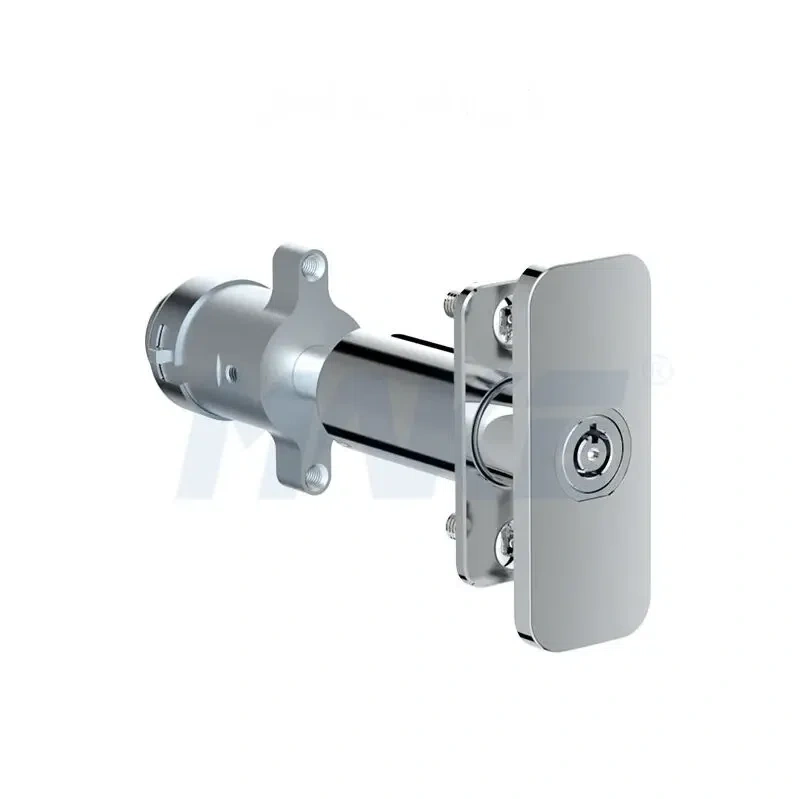
Mechanical locks depend entirely on physical keys. This means lost keys, duplicated keys, and time-consuming rekeying are common concerns. They also lack visibility into who accessed a room or when. Once a key is handed out, control is limited.
RFID locks replace that static model with dynamic credential management. Permissions can be changed instantly, access can be limited by time or role, and every event can be recorded. This gives property owners and facility managers a much higher level of control.
However, RFID locks also require power and basic system management, while mechanical locks are simpler and may remain useful in low-traffic or low-budget situations. In many facilities, a mixed approach is used, with RFID locks for critical or frequently accessed points and mechanical locks for less sensitive spaces.
Proper installation is vital to ensuring RFID electronic locks perform reliably over the long term.
First, the lock type must match the door material and structure. Wooden, metal, glass, and composite doors may require different mounting methods and hardware. The door thickness, handing, and frame condition should also be checked before installation.
Second, indoor or outdoor use must be considered. Outdoor locks need stronger resistance to rain, dust, sunlight, and temperature changes. The system should meet suitable protection standards where necessary.
Third, users should consider whether a standalone or networked system is more appropriate. Standalone locks are easier to install and work well in smaller properties, while networked locks provide central management for larger facilities.
Fourth, power planning matters. Battery-powered locks offer flexible installation without extensive cabling, but maintenance staff must monitor battery condition. Wired systems reduce battery replacement needs but may involve more complex installation work.
Finally, software compatibility and future scalability should not be overlooked. A lock system should be able to expand with the facility and support upgrades, additional users, and integration with other security technologies.
Although RFID locks are highly convenient, regular maintenance helps preserve performance and reliability.
Routine inspection should include checking the battery level, testing the credential reader, verifying smooth mechanical operation, and cleaning the lock surface and reader area. Dirt, moisture, or physical damage can affect reading sensitivity and mechanical response.
Software-based systems should also be updated when needed to maintain security features and compatibility. User credential databases should be reviewed periodically to remove inactive or unauthorized access rights.
In busy environments such as hotels or offices, regular log checks can identify unusual access patterns or attempted security breaches. Preventive maintenance is generally far more efficient than reacting to system failure after it occurs.
Despite their many benefits, RFID electronic locks are not without challenges.
Initial cost can be higher than that of conventional locks, especially when a full access management system is involved. Organizations must also train staff to use and manage the system properly.
Power dependence is another consideration. Battery-powered locks require periodic replacement, and wired systems depend on stable electrical infrastructure. Emergency override options are therefore essential.
Credential loss still remains possible, although it is much easier to deactivate a lost RFID card than to rekey a traditional lock. In some cases, low-quality RFID systems may also face card cloning or interference risks, which is why selecting a reputable and secure product is important.
Even with these challenges, the long-term efficiency, manageability, and security advantages of RFID locks often outweigh their limitations.
The future of RFID electronic locks is closely linked with the rise of smart buildings and digital security ecosystems. Several trends are shaping the next generation of products.
One major trend is the integration of RFID with mobile credentials, allowing smartphones to function as digital keys. This reduces the need for physical cards and makes access even more convenient.
Another trend is cloud-based access management, which enables administrators to manage permissions, monitor events, and generate reports remotely across multiple sites.
There is also growing interest in multi-factor authentication, where RFID credentials are combined with PIN codes, mobile apps, or biometric verification for higher-security applications.
In addition, RFID locks are becoming more intelligent through better encryption, improved energy efficiency, real-time monitoring, and integration with smart home or smart building platforms. These developments will continue to expand the role of RFID locks in both residential and commercial environments.
RFID electronic locks represent a major advancement in modern security and access control. By replacing traditional keys with contactless digital credentials, these systems offer faster access, stronger control, better user management, and improved operational efficiency. From hotels and offices to homes, hospitals, schools, and industrial sites, RFID locks provide a practical and scalable solution for a wide range of environments.
Their key strengths include convenience, automatic locking, programmable access rights, easy credential replacement, and the ability to integrate with larger security systems. While factors such as installation planning, power supply, and product quality must be considered carefully, the overall value of RFID electronic locks is clear.
As buildings become smarter and security demands continue to rise, RFID lock technology will remain an important part of the transition toward more connected, responsive, and secure access control systems. For organizations and property owners seeking a modern alternative to traditional locking methods, RFID electronic locks offer a reliable and forward-looking solution.