Things to Consider When Selecting Cam Locks for Office, Industrial, and Marine Applications
Cam locks are among the most versatile and widely used locking mechanisms across both everyday and specialized applications. From office furniture and mailboxes to industrial enclosures and secure cabinets, cam locks provide a reliable, compact solution for securing access points. Their simplicity belies their effectiveness: through a rotational movement, they provide a secure closure that is both easy to operate and resistant to tampering.
Whether you're securing a toolbox on a construction site, a storage unit on a boat, or sensitive electrical enclosures, selecting a high-quality cam lock is critical. With the sheer variety of designs, materials, and security levels available, understanding the key factors in choosing the right cam lock can make a significant difference in performance, durability, and peace of mind.
At its core, a cam lock is a fastener designed to secure a door, panel, or drawer using a cam—a flat or bent metal piece that rotates with a cylinder or key. When turned, the cam moves behind a frame or into a slot, locking the compartment in place. Despite their simplicity, cam locks offer a surprising range of functionality and can accommodate a wide variety of access and security requirements.
Cam locks are particularly valued for their compactness and ease of installation. They often require minimal modifications to the door or panel, making them ideal for retrofitting or integration into new designs. Furthermore, because of their straightforward operation, they allow for quick access while maintaining an adequate level of security.
Unlike traditional padlocks or combination locks, cam locks integrate directly into the object being secured, offering a streamlined design without protruding parts. This reduces the risk of accidental damage and prevents the lock from being tampered with through brute force. For industrial applications, this integrated design can be particularly advantageous when space is limited, or aesthetics are important.
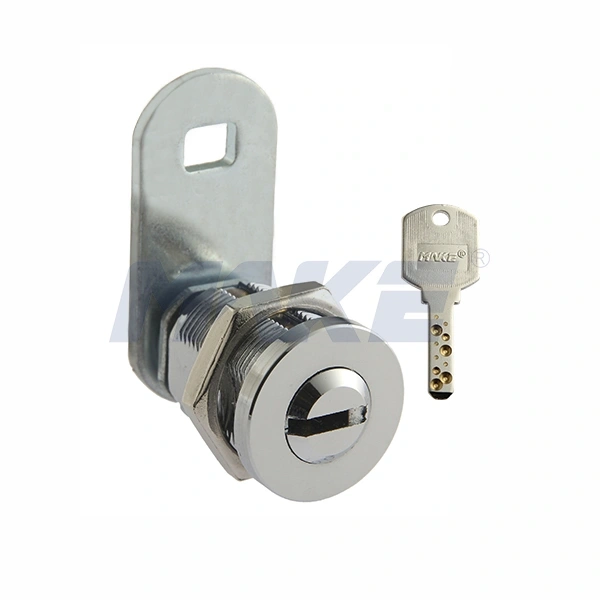
When selecting a cam lock, understanding the required security level is paramount. Cam locks range from basic, low-security options suitable for office drawers to high-security models engineered for industrial applications.
Companies such as MAKE Lock collaborate with original equipment manufacturers to provide medium to high-security cam locks. The right choice depends on the environment and the value of the items being protected. For example:
- Low-Security Applications: Office cabinets, furniture drawers, and mailboxes where access control is mainly for convenience rather than deterrence. These locks are typically simple to operate and cost-effective.
- Medium-Security Applications: Toolboxes, small equipment enclosures, or storage compartments containing moderately valuable items. Locks in this category often feature stronger materials and more complex keyways to resist casual tampering.
- High-Security Applications: Industrial cabinets, electrical enclosures, and sensitive storage units where tamper resistance is critical. High-security cam locks often include features like anti-drill plates, hardened steel cams, and specialized key designs to prevent unauthorized access.
Security levels are not solely determined by the lock itself but also by how it is installed and maintained. Even the highest-rated cam lock can fail if mounted improperly or subjected to environmental stress without adequate protection.
The material of a cam lock significantly influences its durability, resistance to wear, and overall security. Most cam locks are constructed from metals such as nickel-plated steel, brass, or stainless steel.
- Brass: Offers excellent corrosion resistance and smooth operation, making it ideal for indoor or light outdoor use. It is easy to machine and provides a traditional look that complements furniture and cabinetry.
- Nickel-Plated Steel: Provides superior strength and moderate corrosion resistance, suitable for industrial environments where mechanical stress is higher. Nickel plating also improves resistance to scratching and wear.
- Stainless Steel: Highly durable and corrosion-resistant, often used in marine, outdoor, or chemical environments. Stainless steel locks can withstand high humidity, salt exposure, and harsh chemicals without compromising security.
The choice of material should be based on environmental exposure, the expected frequency of use, and the level of security required. High-quality cam locks often use a combination of these materials—for instance, a brass body with a stainless steel cam—to optimize both durability and smooth operation.
Key design is another critical factor affecting security. Cam locks support various key types, each offering different levels of resistance to duplication or picking:
- Barrel Keys: Simple and commonly used, suitable for low-security applications. Barrel keys are easy to duplicate and often used in office furniture or mailboxes.
- Vertical Cut Keys: Provide enhanced security due to more complex grooves, making duplication harder. They are commonly used in higher-value storage applications.
- Biaxial Keys: Represent the highest standard for cam lock security, offering advanced protection against tampering and unauthorized access. They are typically reserved for industrial or high-security applications where sensitive materials are stored.
Some cam locks also feature master key systems or keyed-alike configurations, allowing multiple locks to operate with a single key. These systems are particularly useful in facilities management, where quick access to multiple cabinets or enclosures is needed without compromising security.
Cam locks come in a wide range of sizes and configurations, allowing them to accommodate different thicknesses of panels and doors. The cam—the rotating arm attached to the lock—also varies in length and shape to meet specific operational needs.
Standard cam lengths include:
- Cam Length A: No Length, 3/4″ (19 mm), 7/8″ (22 mm), 1″ (25.4 mm), 1-1/8″ (28.57 mm), 1-1/4″ (31.75 mm), 1-3/8″ (34.92 mm), 1-1/2″ (38.1 mm), 1-3/4″ (44.45 mm), 2″ (50.8 mm), 2-1/2″ (63.5 mm), 3″ (76.2 mm)
- Cam Length B: No Length, 3/4″ (19 mm), 7/8″ (22 mm), 1″ (25.4 mm), 1-1/8″ (28.57 mm), 1-1/4″ (31.75 mm), 1-3/8″ (34.92 mm), 1-1/2″ (38.1 mm), 1-3/4″ (44.45 mm), 2″ (50.8 mm), 2-1/2″ (63.5 mm), 3″ (76.2 mm)
The choice of cam length must match the thickness of the door or panel and the depth of the enclosure. Using a cam that is too short may prevent the lock from fully engaging, while a cam that is too long may protrude or interfere with adjacent components. Adjustable cams or multiple mounting options are often available, providing flexibility for different applications.
Ease of installation is one of the key advantages of cam locks, but proper installation requires attention to detail. Factors such as panel thickness, hole diameter, and alignment with mating surfaces must be considered. Misaligned or improperly sized cam locks can compromise both security and operational smoothness.
Some tips for proper installation include:
- Verify panel thickness: Ensure the lock body and cam length match the panel or door thickness.
- Align holes accurately: Drill or punch holes with precision to prevent binding or misalignment.
- Secure fasteners properly: Tighten retaining nuts or screws to prevent wobbling without overtightening, which can damage threads.
- Check rotation clearance: Confirm that the cam rotates freely without obstruction or interference with other components.
By following these installation best practices, you can maximize both the performance and security of your cam locks.
The environment in which a cam lock will operate greatly influences both material selection and design features. Outdoor or marine environments may expose locks to moisture, salt, and temperature fluctuations, necessitating corrosion-resistant materials and coatings. Industrial environments may involve exposure to dust, chemicals, or mechanical impacts, requiring more robust construction and protective features.
Special coatings, such as chrome plating, nickel plating, or powder-coated finishes, can enhance corrosion resistance while maintaining smooth operation. For high-humidity or outdoor installations, stainless steel or brass locks are generally preferred. Additionally, environmental factors may influence the choice of lubricants used to maintain smooth cam operation over time.
A high-quality cam lock should deliver reliable performance over its service life with minimal maintenance. Regular lubrication, inspection for wear, and proper handling of keys can extend longevity and prevent operational failures.
Maintenance tips include:
- Lubricate periodically: Apply appropriate lock lubricants to the cylinder and cam to maintain smooth operation. Avoid using oils that attract dust.
- Inspect for wear or damage: Check for signs of corrosion, worn keyways, or bent cams. Replace components promptly if necessary.
- Avoid excessive force: Do not force keys or rotate cams beyond their designed limits, as this can cause permanent damage.
- Keep keys secure: Unauthorized duplication or loss of keys can compromise security; manage key distribution carefully.
Investing in premium materials and designs upfront reduces the likelihood of replacement or downtime in the future, ensuring the lock continues to function as intended for years.
In addition to general-purpose cam locks, specialized variants exist for unique applications. These may include keyed-alike systems for multiple enclosures, master-keyed configurations for controlled access, or high-security cam locks designed to resist drilling, picking, and forced entry.
Some examples include:
- Electrical enclosures: Cam locks with insulation and non-conductive components to meet safety standards.
- Marine applications: Corrosion-resistant stainless steel cam locks with rubber seals to prevent saltwater intrusion.
- Industrial machinery: Heavy-duty cam locks with hardened steel cams and reinforced bodies to withstand vibrations and mechanical stress.
Understanding the specific requirements of your application ensures that you select a lock that meets both security and operational needs, preventing costly failures or unauthorized access.
- Office Furniture Security: A large corporate office implemented vertical cut cam locks on all filing cabinets, providing medium security while allowing employees to access documents quickly. The locks were brass with nickel plating, balancing aesthetics, corrosion resistance, and cost-effectiveness.
- Marine Storage Lockers: A yacht manufacturer opted for stainless steel cam locks with rubber gaskets to secure onboard lockers. These locks resisted saltwater corrosion and maintained smooth operation despite daily exposure to harsh marine conditions.
- Industrial Electrical Cabinets: A factory retrofitted electrical enclosures with biaxial cam locks to prevent tampering. These locks featured hardened steel cams and master-keyed configurations, allowing maintenance staff quick access while limiting exposure to unauthorized personnel.
These examples illustrate the versatility and adaptability of cam locks across diverse applications, emphasizing the importance of selecting the right type, material, and key configuration.
Choosing the right cam lock requires careful consideration of security level, material, key type, cam dimensions, environmental conditions, installation requirements, and maintenance practices. High-quality cam locks balance simplicity with reliability, offering secure, convenient access for a wide range of applications. By understanding the technical specifications and operational demands, you can ensure that your cam lock investment provides long-lasting performance, safety, and peace of mind.
For manufacturers, designers, and end-users alike, prioritizing quality and compatibility in cam locks is a crucial step toward achieving both functional and security goals. Selecting a premium cam lock is not just about locking a compartment—it’s about protecting assets, ensuring operational reliability, and enhancing user confidence in any environment.